Take the engine and gearbox apart without taking the car apart.
Interactive 3D cutaways of the engines and transmissions in the cars I actually run. Orbit them, explode them, click any part and read what it does. Watch six pistons breathe through one 720° cycle, or pick a gear and follow the torque path while the ratios and road speed recalculate.
Engine explorer
Take the engine apart, component by component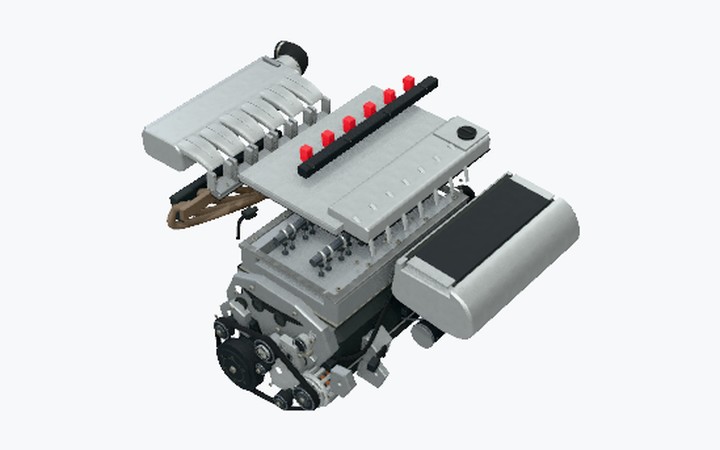
Golf Mk5 R32
Six cylinders under one head, taken apart on screen. Orbit the assembly, slide it from assembled to fully exploded, step through it layer by layer and read what each component does and where it connects.
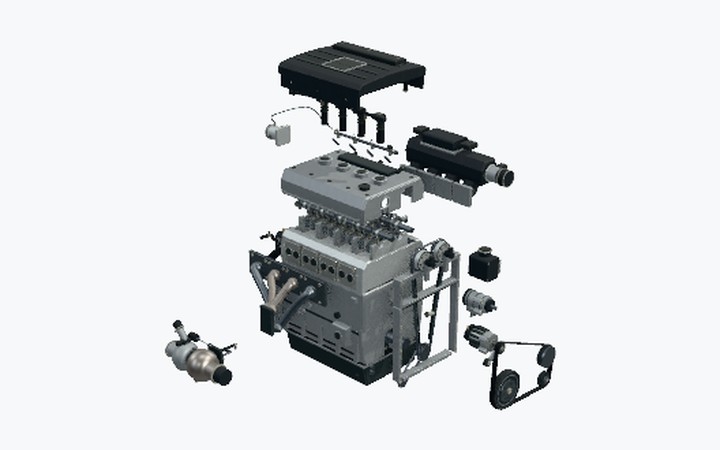
BMW X4 · N20
The twin-scroll turbo four, opened up. Inspectable assemblies from the cover down to the crank, with the turbo, charge cooler and hose runs separated out so you can see what belongs to the engine and what belongs to the car.
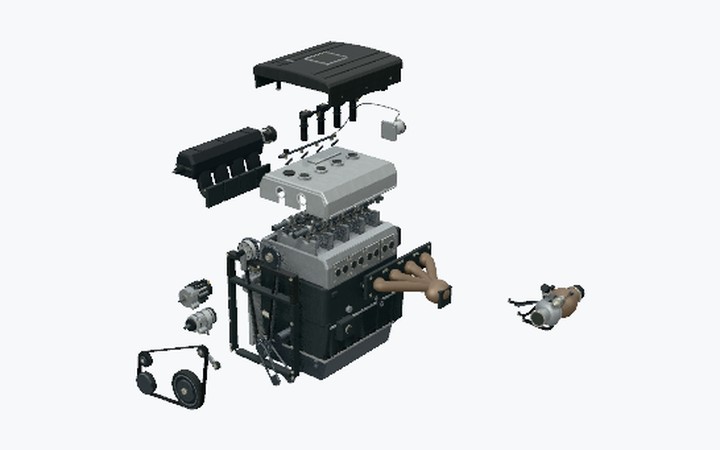
Volkswagen Sharan · 2.0 TSI
The people-mover’s turbocharged four. The same approach, with the intake, exhaust and cooling hardware pulled apart so the air path reads end to end.
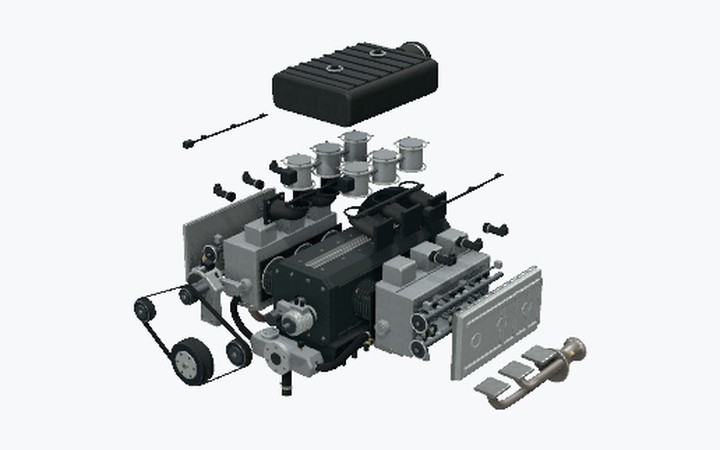
Porsche 911 GT3 RS · 4.0
Two banks of three lying flat either side of the crankcase. Assemblies showing why an opposed engine can sit behind the rear axle without raising the car. No gearbox simulation is implied here.
Engine labs
One 720° cycle, four strokes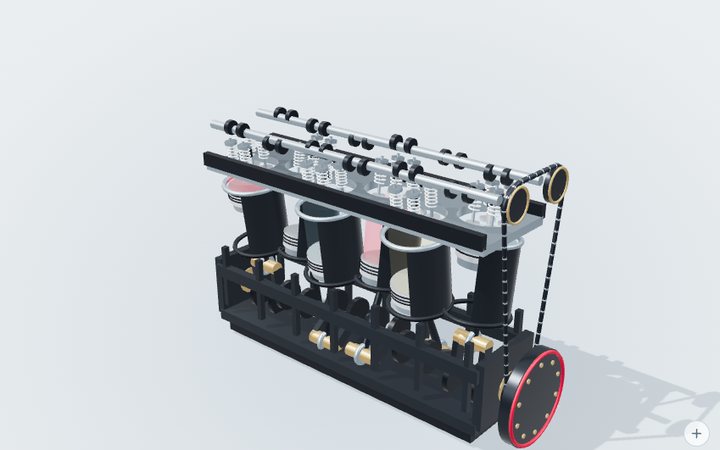
Golf Mk5 R32
Six cylinders in two closely staggered rows under one cylinder head — the layout that makes a VR6 a VR6. Watch all six pistons, rods and valves move through the same 720° cycle, and isolate any one of them.
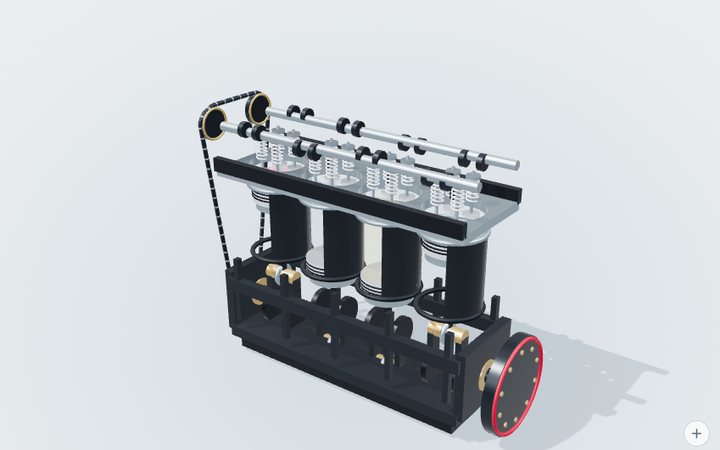
Sharan 7N
A turbocharged, direct-injection four sharing one straight cylinder row and a common crankshaft. The simplest way to read the intake, compression, power and exhaust strokes as they happen.
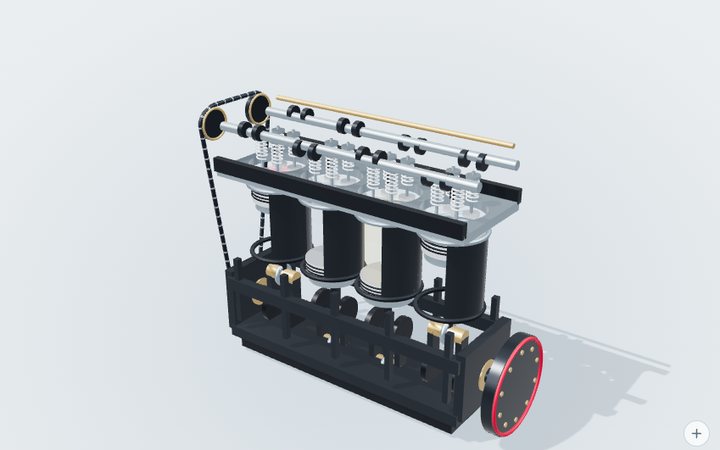
BMW X4 F26
The N20 combines a twin-scroll turbo, variable cam timing and variable intake-valve lift. The lab shows the underlying four-stroke cycle, with the Valvetronic eccentric shaft drawn in as a reference.
Transmission labs
Open one and drive it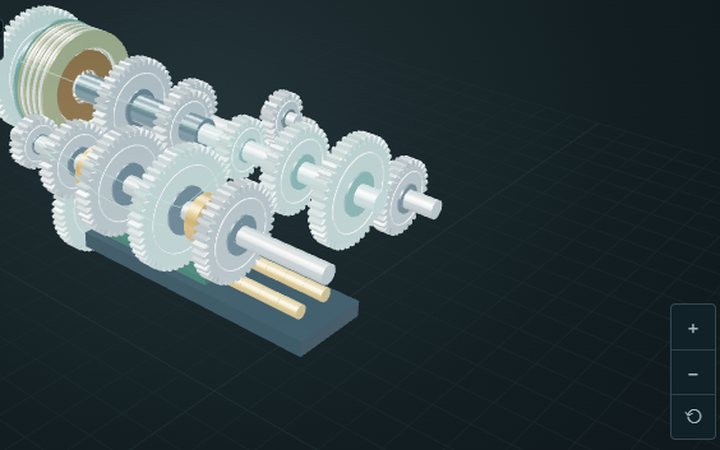
Golf Mk5 R32
The car that put the dual-clutch gearbox on the map. Two wet clutches, two concentric input shafts, two final drives, and a Haldex coupling that quietly turns a front-driver into an all-wheel-drive one.
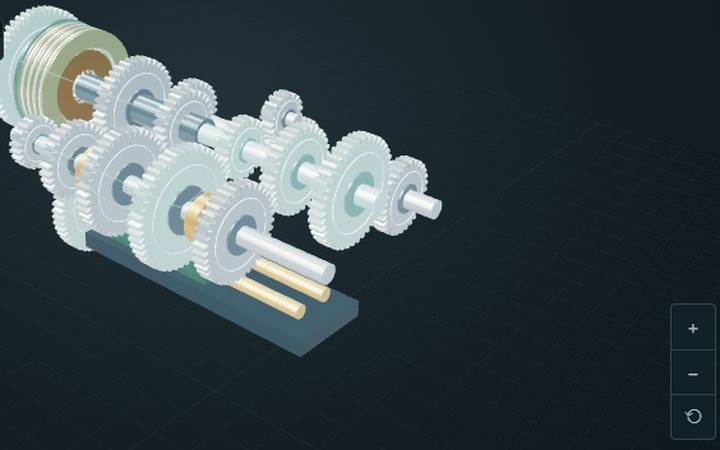
Sharan 7N
The same twin-clutch idea moving a seven-seat MPV, front wheels only. Modelled in the six-speed wet-clutch configuration until this car's gearbox code is confirmed.
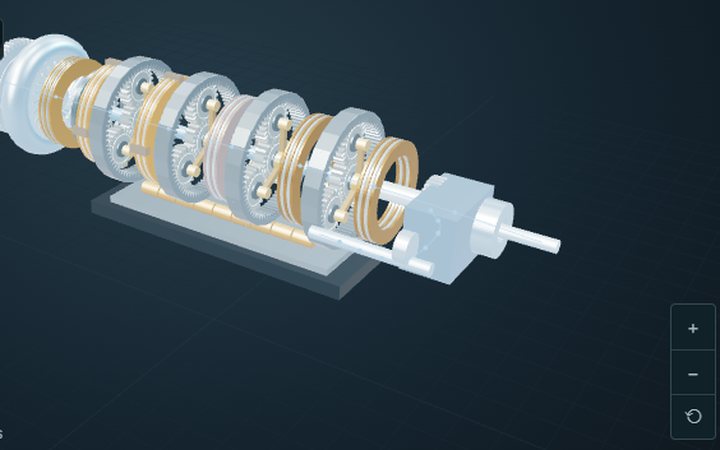
BMW X4 F26
A torque converter, four planetary gearsets and five shift elements, laid out along the length of the car. Pick a gear and watch which three of A to E are applied to make it.
Vehicle studio
Whole car, part by part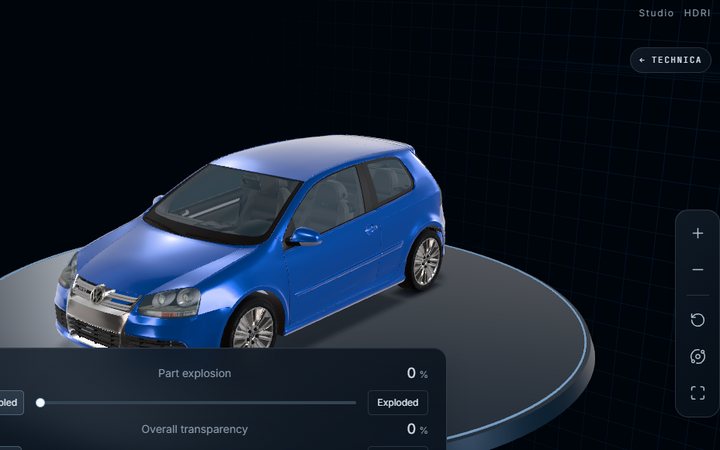
Golf Mk5 R32
The whole car, not just the gearbox. A detailed Mk5 R32 body with a modelled cabin, lamps, exhaust and big brakes behind the spokes. Orbit it, isolate by body, glass, wheels, cabin or trim, explode all 83 parts, fade to X-ray, repaint in six colours and relight under four HDR environments.
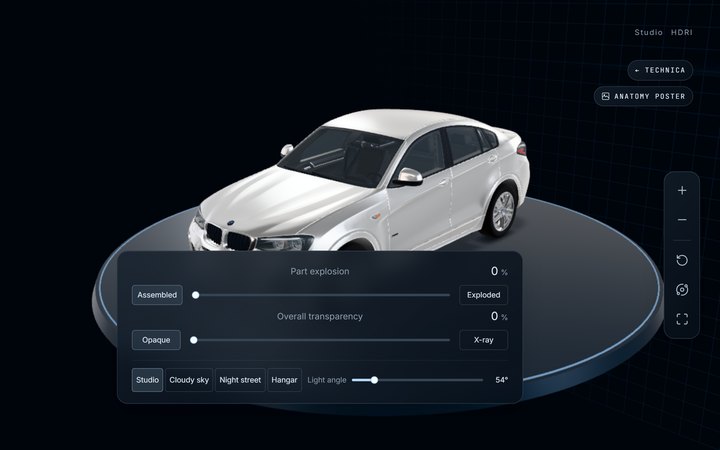
BMW X4
The coupé-SUV, opened up. Four doors, the sloping roofline, kidney grille, lamp optics and a modelled five-seat cockpit. Orbit it, isolate by body, glass, wheels, interior or trim, explode all 108 parts, fade to X-ray, repaint it in seven colours and relight it under four HDR environments.
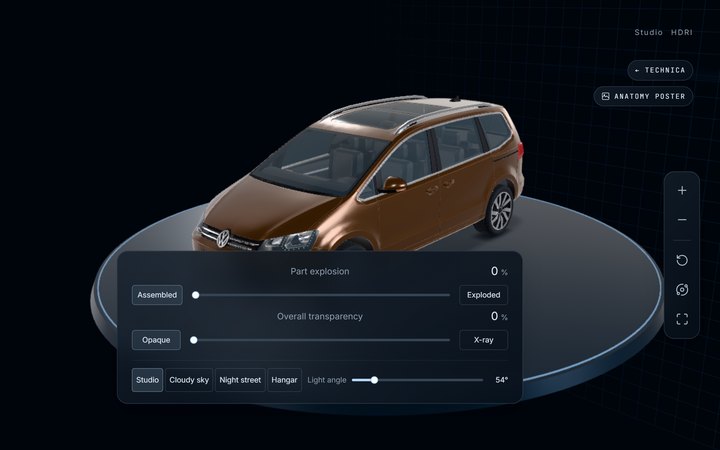
Volkswagen Sharan
The people-mover, taken apart. Sliding doors, tailgate, glazing, chrome and a full seven-seat 2–3–2 cabin you can isolate row by row. Orbit it, explode all 436 parts, fade to X-ray, repaint it and relight it under four HDR environments.
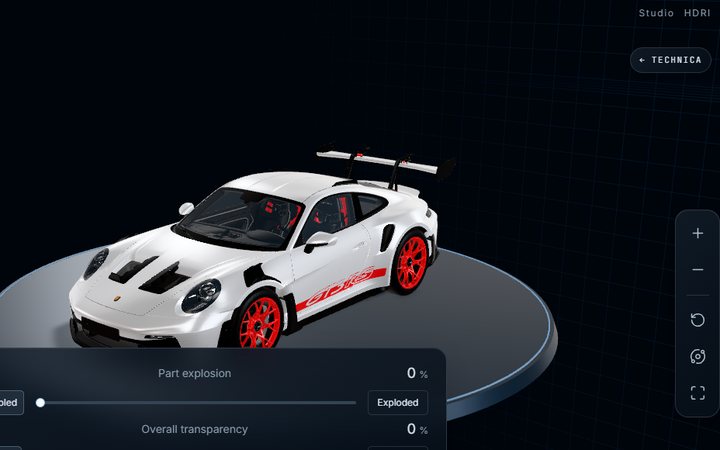
Porsche 911 GT3 RS
A detailed full-car model you can orbit, isolate by body, glass, wheels, cabin or trim, explode into its parts, fade to X-ray, repaint in six schemes and relight under four HDR environments.
The engine labs share one 720° cycle across the model and every diagram, with camshafts at half crank speed. Valve events are drawn as an ideal four-stroke with no overlap, so variable valve timing, Valvetronic and real ignition maps are described rather than simulated, and the pressure curve is relative and educational, not measured. The R32 ratios come from the published VW/Audi workshop table for the 02E four-wheel-drive DSG behind the 3.2 V6. The Sharan is shown with a published DQ250 transverse set because its own gearbox code has not been confirmed yet — check the sticker on the box before ordering anything. The X4 uses BMW's original F26 petrol ratios (July 2014) with ZF's published shift-element matrix; its axle ratio is not modelled, so that lab shows gearbox ratio only. The 3D models are educational approximations: functional layout is right, tooth counts and exact geometry are not. The R32 studio uses a converted three-door reference mesh, not manufacturer CAD and not the five-door body. The Sharan studio is a converted 2016-model mod corrected toward the 2012 car, with an original seven-seat cabin built from period photographs. The X4 studio is a converted game mod corrected to BMW's published F26 drawings, carrying M Sport bodywork rather than a confirmed xDrive20i trim; see the notices beside each model for provenance. The GT3 RS studio is a visual disassembly of a third-party reference model, not a repair guide. The anatomy poster behind each studio card is an illustrative cutaway drawn for this site, not factory CAD.